
Cold and humidity
Labels detaching in cold?
Common adhesives fail in fridge, freezer or humid environment.

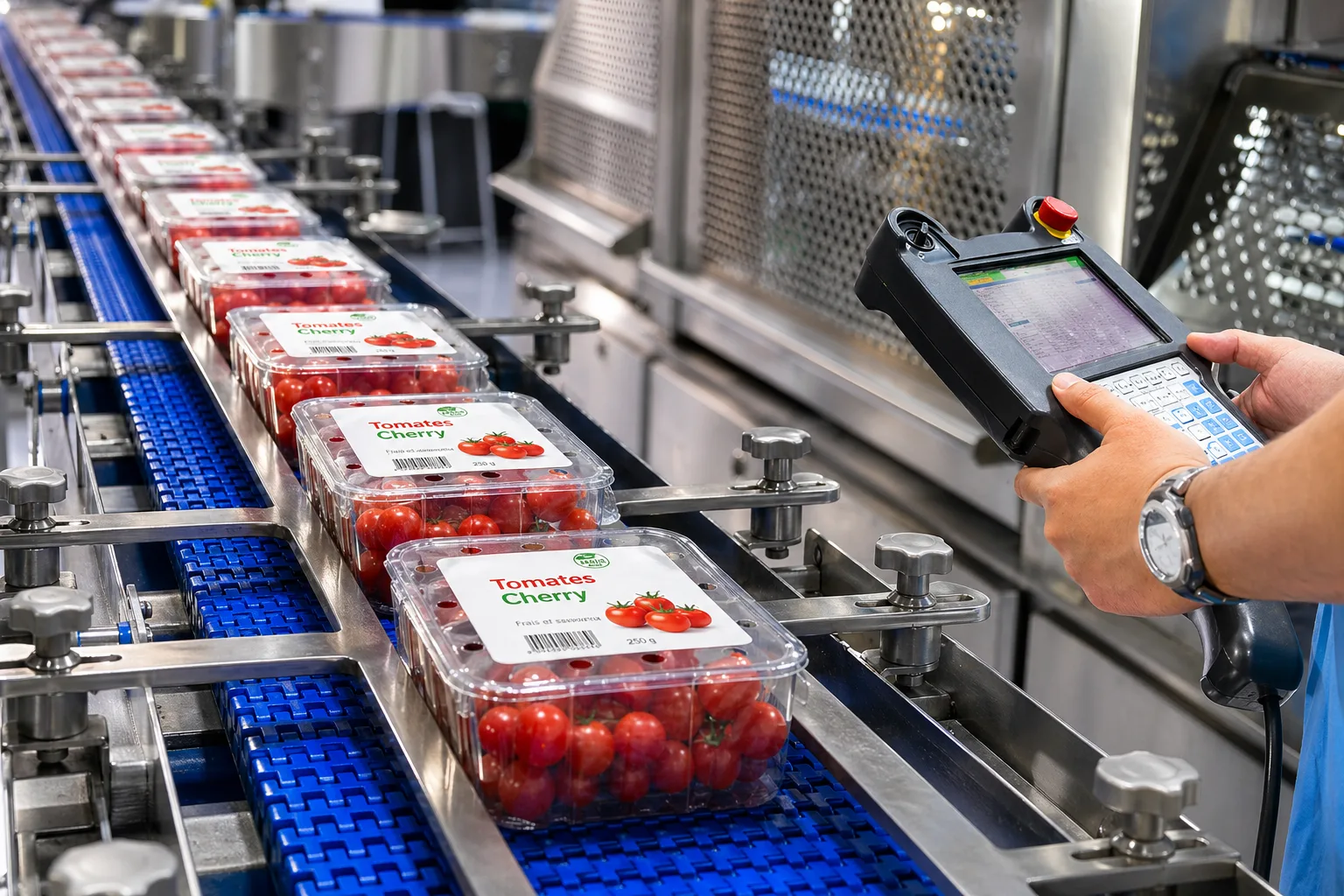
Industrial printers, durable labels (cold, humidity, grease), resin ribbons and scanners to identify batches, expiry, ingredients and origin. We advise based on packaging and cold chain.




In food, a poorly chosen label can cause labeling failures, fines for unreadable expiry or loss of traceability. That is why we define equipment, label, ribbon and reading based on packaging and cold chain.
At Gustavo D. Campos we help you build the complete system to identify batches, expiry, ingredients and traceability.
Most go unnoticed until they cause a fine for unreadable expiry, a rejected batch or a product recall. Catching them early prevents escalation.
Common adhesives fail in fridge, freezer or humid environment.
A home printer can't handle a food plant pace.
Material or ribbon poorly chosen erases expiry with humidity or abrasion.
Without serialized reading, batch control becomes guesswork.

Nutritional tables or GHS info require color printing.

The box goes through ambient, chilled and frozen. Each leg demands a different adhesive; the usual mistake is using the same label for all three.
If the box goes into the cold room even once, cold hot-melt from the start: there is no way to re-stick a label in the cold.
The food flow in 4 stages: from raw material reception to final consumer labeling.
Identification of raw material and inputs on intake with batch, date and expiry, ready for control and stock rotation.
Controlled stockBatch, expiry and ingredients labeled on the production line per SENASA, ANMAT or local regulation.
Continuous traceabilityFinished product label with nutritional info, allergens and tracking code on primary or secondary packaging.
Regulatory complianceLabels for boxes, pallets and logistic traceability to the customer, distributor or retail chain.
Distribution without reworkPerformance depends on printer, label, ribbon and scanner withstanding cold, humidity and handling.
Consult recommended combination
We help you define the right combination before you buy.
The clearer these variables are when you ask, the more concrete and useful the recommendation will be.
Whether the label goes to the fridge, freezer or a dry environment.
Packaging with grease, condensation or washing: calls for extra adhesive and resin.
Readable to the end: direct thermal for days, ribbon for months. If you print directly on the package with a TTO date coder, we have the Near Edge ribbon.
Whether you need nutrition facts, GHS or just batch and expiry.
If the label comes out of the scale, the roll depends on the scale model.
Number of products labeled per day.
With this information we can recommend better.
The questions we hear most when someone is building or upgrading a labeling system for this sector.
For cold and frozen we recommend thermal labels with cold-resistant adhesive or synthetic with permanent adhesive. They withstand surface humidity, extreme cold and handling during the distribution chain. We always recommend validating adhesive based on application and storage temperature.
For continuous production Zebra ZT411, SATO CL4NX or Honeywell PM45 usually work well: metal chassis, wide width and connectivity for ERP integration. If you need color labels with nutritional or GHS info, options like Epson ColorWorks CW-C6000AU with BS 5609 certified ink exist.
It depends on the level of detail. 1D barcode is enough for basic batch, date and product. QR or DataMatrix are ideal if you need to link each unit to an extended traceability system (origin, ingredients, producer, consumer website). We guide you based on your regulatory requirements.
Tell us what you label, in what packaging and if it goes through cold. We will recommend printer, label, ribbon and scanner based on your production.